Something About this InMail Felt Off
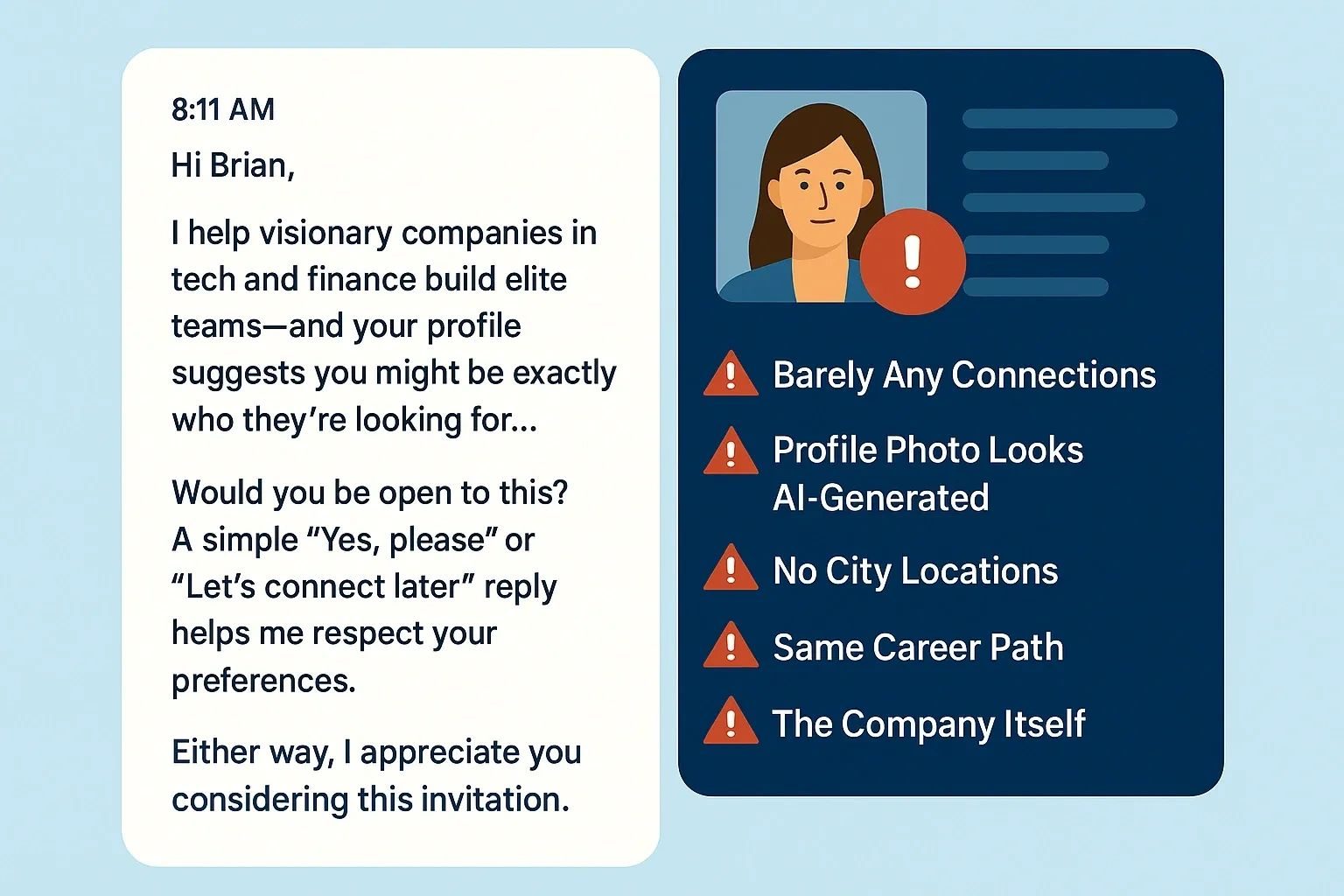
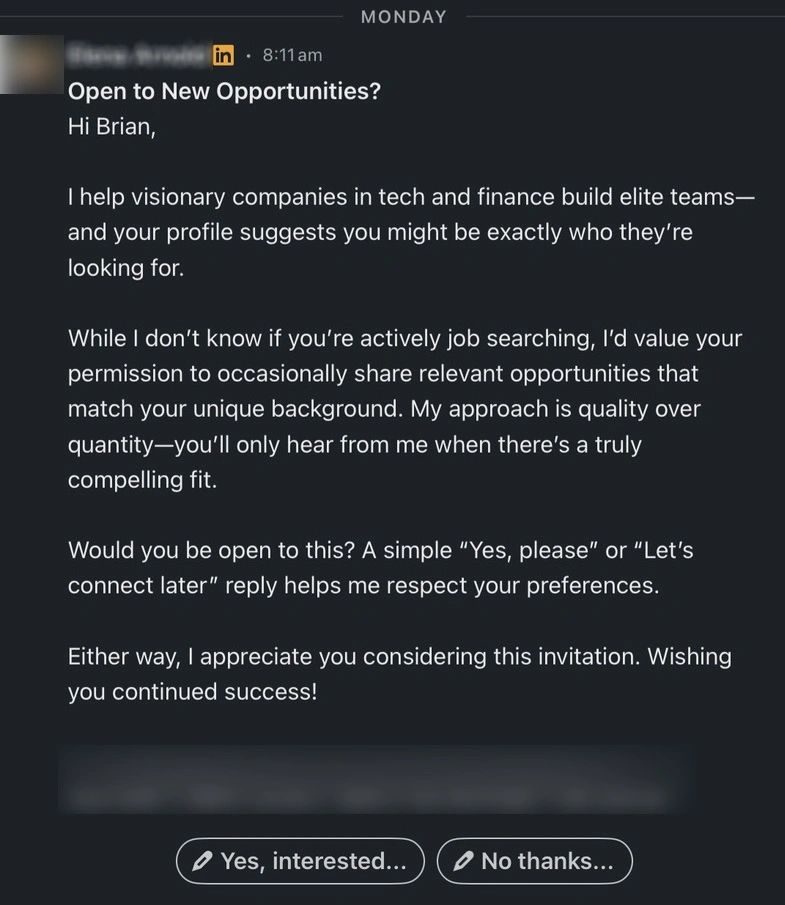
The other day, I got a message on LinkedIn from a recruiter and right away, something felt off. It was well-written but there were several red flags. I wanted to share the message and walk through what made me pause:
🚩 #1: Barely Any Connections
This recruiter claimed 10 years of experience, but only had 69 LinkedIn connections. That’s highly unusual as most recruiters will connect with anyone.
🚩 #2: The Profile Photo
The image looked AI-generated. Not one of those obvious ones making the rounds, this was subtle. A very good fake. It took me a minute to catch it.
🚩 #3: No Specific Locations
Every recruiter at this firm listed their location as just “United States.” No cities, no regions, no metro areas. That’s not typical.
🚩 #4: Identical Career Paths
Every employee had almost the exact same trajectory and it felt too convenient:
- A year in customer service (cashier, front desk, server)
- 4–5 years at a major corporate HR job
- 4–5 years at this exact same staffing firm
🚩 #5: The Company Profile
The recruiting company didn’t list a President, VP, or any senior roles just “Recruiter.” Anyone who’s worked in staffing know leaders love listing themselves as “Founder” or “President.”
They also had zero attrition. In five years, no one had left or hired. Either they’re the best-kept secret in staffing, or something doesn’t add up.
🚩 #6: The Pitch Itself
Back to the original message there was no actual job, no mention of skills, no company. It was a generic intro with no substance.
Why does it matter?
I can’t say for sure what the goal is here. These scams don’t always involve money. Sometimes it’s data mining or phishing. Remember, we live in an age where people sell data all the time now. If they collect a resume no they have your professional history, contact information, references, or even pull you into a fake hiring funnel.
Here’s my word of caution: the scams are evolving. These aren’t your old-school messages. They’re getting harder to spot even for folks like us who live on LinkedIn.
If something feels off, trust that feeling. Ask questions, dig into the profile, and don’t hesitate to report it.